What to do after a slip and fall in Wesley Chapel
A fall can happen in a second — a wet floor at the grocery store, a spill near a restaurant table, an uneven walkway at an apartment complex or one of the busy shopping centers around Wiregrass. One moment you’re running an errand, the next you’re on the ground, embarrassed and hurting, unsure what just happened or what to do.
Falls are more serious than people give them credit for, and what you do in the first minutes and days matters — both for your recovery and for any Florida slip and fall claim you may need to make. Here’s a plain-language guide from a Wesley Chapel slip and fall lawyer team on the steps that protect you after a slip and fall in Wesley Chapel and across Pasco County — and when it’s worth calling a Pasco County slip and fall attorney.
Where falls tend to happen
Most serious falls come down to a hazard the property should have addressed: a spill or freshly mopped floor with no warning sign, a leak near a drink station, uneven or broken pavement in a parking lot, a torn mat, poor lighting on a stairwell, or a cluttered aisle. Grocery and big-box stores, restaurants, gas stations, and apartment complexes are common settings simply because so many people pass through them. Knowing that helps you focus on the one thing that matters most in the moment: capturing what caused the fall before it’s cleaned up or fixed.
1. Check for injuries and get to a safe spot
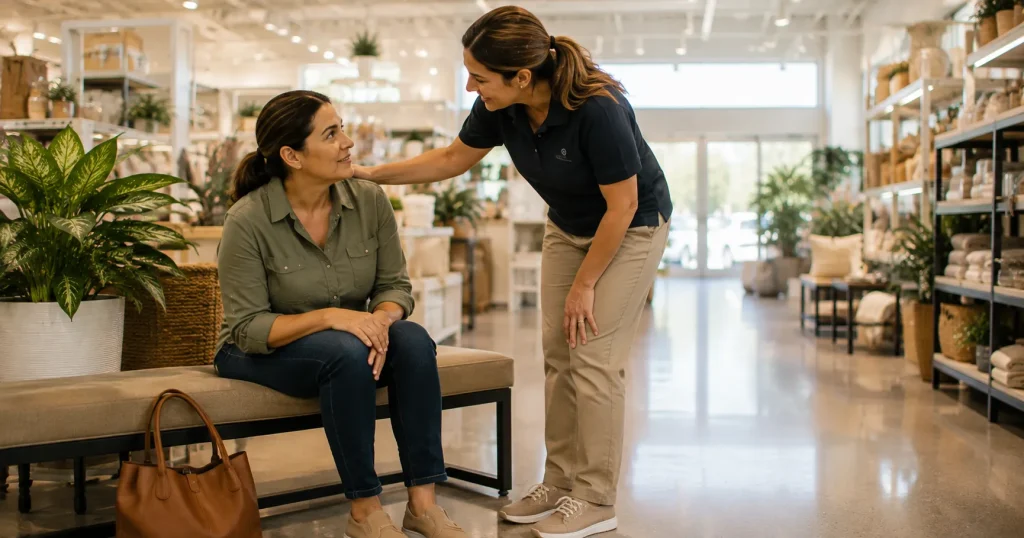
Take a moment before you get up. Falls can cause injuries — to your back, head, wrists, or hips — that aren’t obvious right away, and moving too fast can make them worse. If you’re hurt, stay put and ask someone to call for help. If you can move safely, get to a chair or a spot out of the way.
2. Report the fall and ask for an incident report
Tell a manager or property employee what happened, and ask them to create a written incident report. Ask for a copy, or at least the report number and the name of the person who took it. Stick to the facts — where, when, and what caused the fall — and don’t downplay your injuries or say you’re “fine” out of embarrassment. That report is an official record that the fall occurred.
3. Document the hazard and the scene
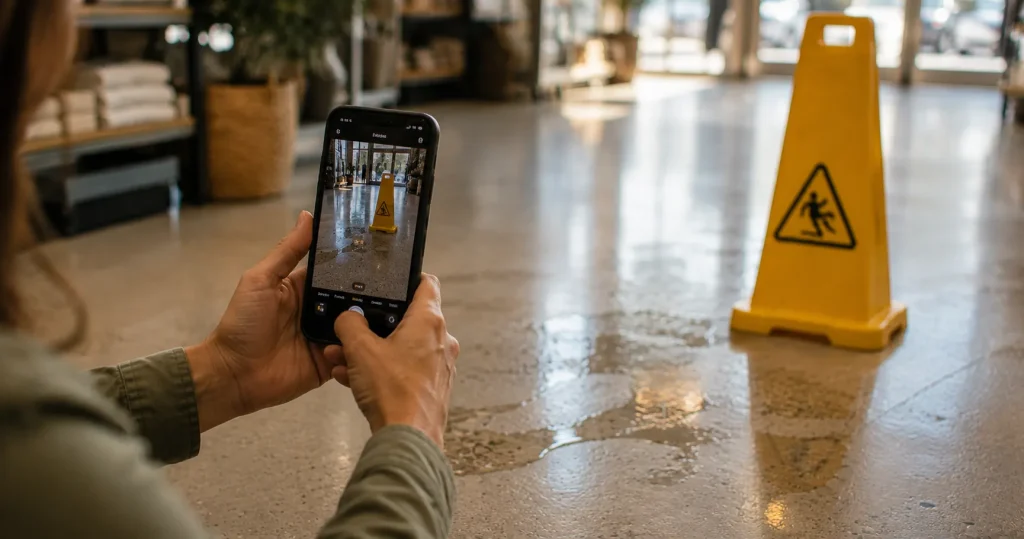
This is the most important step, because the hazard often disappears within minutes. If you’re able, photograph exactly what caused the fall — the spill, the wet floor, the broken step, the missing warning sign — from a few angles, along with the surrounding area and your shoes. Note the time. And get the names and phone numbers of anyone who saw it happen; a neutral witness can make all the difference later.
4. See a doctor promptly
Get checked by a doctor soon, even if you think you’re okay. Fall injuries — especially to the head, back, and soft tissue — often show up hours or days later, and prompt care both protects your health and creates a medical record that connects your injuries to the fall. Follow through on any recommended treatment; gaps in care are one of the first things an insurer will point to.
5. Keep records, know the deadline, and talk to a lawyer
Keep a folder with your medical bills and records, the incident report, and any correspondence — and hang on to the shoes and clothing you were wearing. Florida also limits the time you have to act: most fall claims based on negligence must be filed within two years. Because these cases turn on proving the property owner knew or should have known about the hazard, talking with a local attorney early — while the evidence is still fresh — can make a real difference. Our Wesley Chapel premises liability lawyer team is happy to talk it through.
Frequently asked questions
What do I have to prove in a Florida slip-and-fall case?
For a fall caused by a spill or other temporary hazard in a business, Florida law generally requires showing that the business knew about the dangerous condition, or that it existed long enough that they should have known and addressed it. That’s why documenting the hazard — and anything suggesting how long it had been there — is so important, and why photos and witness names taken right away carry a lot of weight.
Should I report the fall even if I'm embarrassed or not sure I'm hurt?
Yes. Report it to a manager or property employee and ask for a written incident report before you leave. Falls are often more serious than they first feel, and adrenaline can mask an injury for hours. A prompt report and a prompt medical check protect both your health and your ability to make a claim if you need to.
The property owner's insurer asked me for a statement — do I have to give one?
No, you’re not required to give a recorded statement to the property owner’s insurance company, and it’s fine to decline or say you’ll follow up. Adjusters may frame questions in ways that shift blame onto you for “not watching where you were going.” It’s often wise to speak with an attorney before giving any recorded statement.
How LMD helps injured neighbors in Wesley Chapel
At Lucas, Macyszyn & Dyer, the attorney you meet is the attorney who handles your case — no call centers, no handoffs. We prepare every case as if it’s headed to trial, because that’s what earns respect from insurance companies and stronger results for our clients. And we’re right here in the community: our Wesley Chapel office serves injured people across Pasco County, backed by 20+ years of experience and more than $100 million recovered for clients. (Past results do not guarantee a similar outcome.)
Talk to a real attorney, free
If you or someone you love was hurt in a slip and fall in Wesley Chapel or anywhere in Pasco County, we’re ready to help. Get a free case evaluation — no pressure, no obligation, and no fee unless we win your case.
Lucas, Macyszyn & Dyer — Injury Attorneys 28210 Paseo Drive, Suite 190-254, Wesley Chapel, FL 33543 Call (813) 849-5353 for your free case evaluation.
This article is general information about Florida law, not legal advice, and reading it doesn’t create an attorney-client relationship. Every case is different — talk to an attorney about your specific situation.



 (727) 849-5353