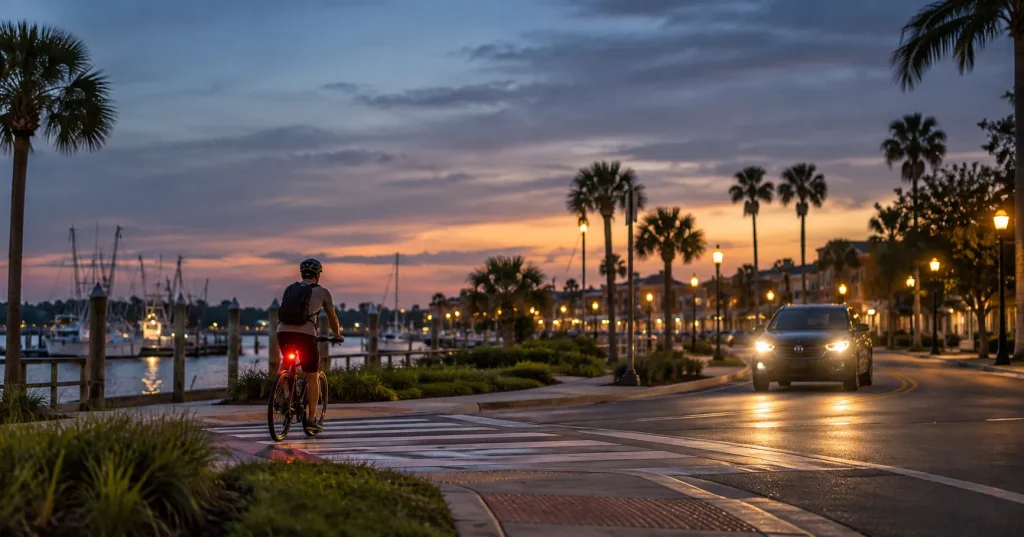
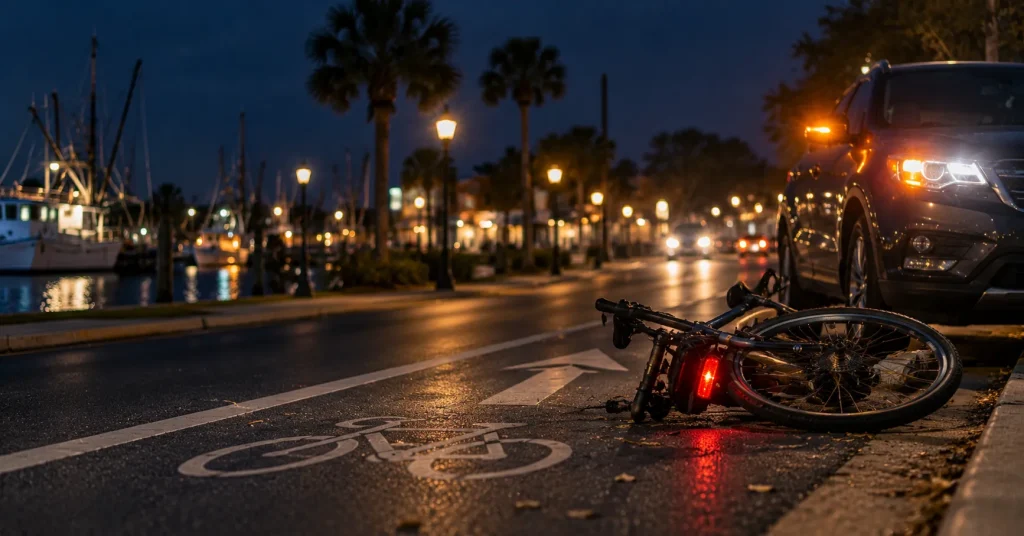
Florida law requires every bicycle ridden between sunset and sunrise to have a white front light and a red rear light and reflector. With daylight saving time ending Nov. 1, many Tarpon Springs riders who use the Pinellas Trail after work will now be riding in the dark. Here’s what the law requires and how to stay visible.
H2: What Florida's bike light law requires
You can add more lights or reflectors to your bike or your body. Extra visibility is allowed and smart.
Five tips for riding safely after dark in Tarpon Springs
1. Check your lights before every ride
Charge rechargeable lights and carry a spare. A light that dies halfway down the trail leaves you invisible and out of compliance.
2. Slow down at Pinellas Trail road crossings
The trail crosses busy streets through Tarpon Springs. Drivers turning at night may not expect a cyclist to appear from the trail. Slow down, make eye contact if you can, and don’t assume a car will stop.
3. Wear something reflective
A reflective vest, ankle bands, or pedal reflectors catch headlights from the side, where a front or rear lamp can’t help.
4. Ride predictably on Alt 19 and Tarpon Avenue
When you’re on the road, ride with traffic, signal your turns, and hold a steady line. Drivers can only avoid what they can see coming.
5. Plan a well-lit route home
If part of your usual ride is dark and unlit, choose a route with streetlights for the winter months.
What to do if a car hits you on your bike
Get medical care. Head and wrist injuries are common, and some symptoms show up later.
Call 911 and get a crash report. A report helps document how the crash happened.
Keep your bike, lights, and gear as they are. Your light and reflectors can show you were visible.
Photograph the scene. Capture the crossing or intersection, the lighting, and the car’s position.
Get witness names and numbers. Other trail users often see what happened.
Talk to a lawyer before the insurer. Adjusters may try to blame the cyclist, especially at night.
Frequently asked questions
What lights does Florida require on a bike at night? A white front light visible from at least 500 feet, plus a red rear light and a red rear reflector visible from 600 feet, from sunset to sunrise (Fla. Stat. § 316.2065).
If I didn’t have a light, can I still bring a claim? Often, yes. A missing light doesn’t excuse a driver who wasn’t paying attention. Under Florida’s comparative negligence rule, your recovery can be reduced by your share of fault, and you can’t recover if you’re found more than 50% at fault (Fla. Stat. § 768.81).
Does it matter if the crash happened on the trail or the road? Yes. Where it happened affects who may be responsible and what rules applied. An attorney can sort out those details for your case.
Talk to a Tarpon Springs bicycle accident attorney
If a driver hit you while you were riding, you don’t have to take on their insurance company alone. The attorney you meet at LMD is the attorney who handles your case, and we prepare every case as if it’s going to trial. Learn more about our Tarpon Springs bicycle accident lawyers, or contact us.
Call (727) 849-5353 for a free case evaluation at our office at 623 East Tarpon Avenue, Tarpon Springs, FL 34689. No fee unless we win.
This article is general information, not legal advice. Reading it does not create an attorney-client relationship.


 (727) 849-5353