Staying safe on U.S. 19 and Alternate 19 in Tarpon Springs
If you live in Tarpon Springs, two roads probably carry most of your driving: U.S. 19, the fast multi-lane route east of town, and Alternate 19 — Pinellas Avenue — the older coastal road that runs right through downtown and past the Sponge Docks. They’re how we get everywhere, and most trips are uneventful. But these busy roads are also where most local crashes happen.
The good news is that a little extra awareness goes a long way. Here’s a practical guide to driving Tarpon Springs’ busiest roads more safely, plus what to do if a crash happens anyway.
Why these two roads see more crashes
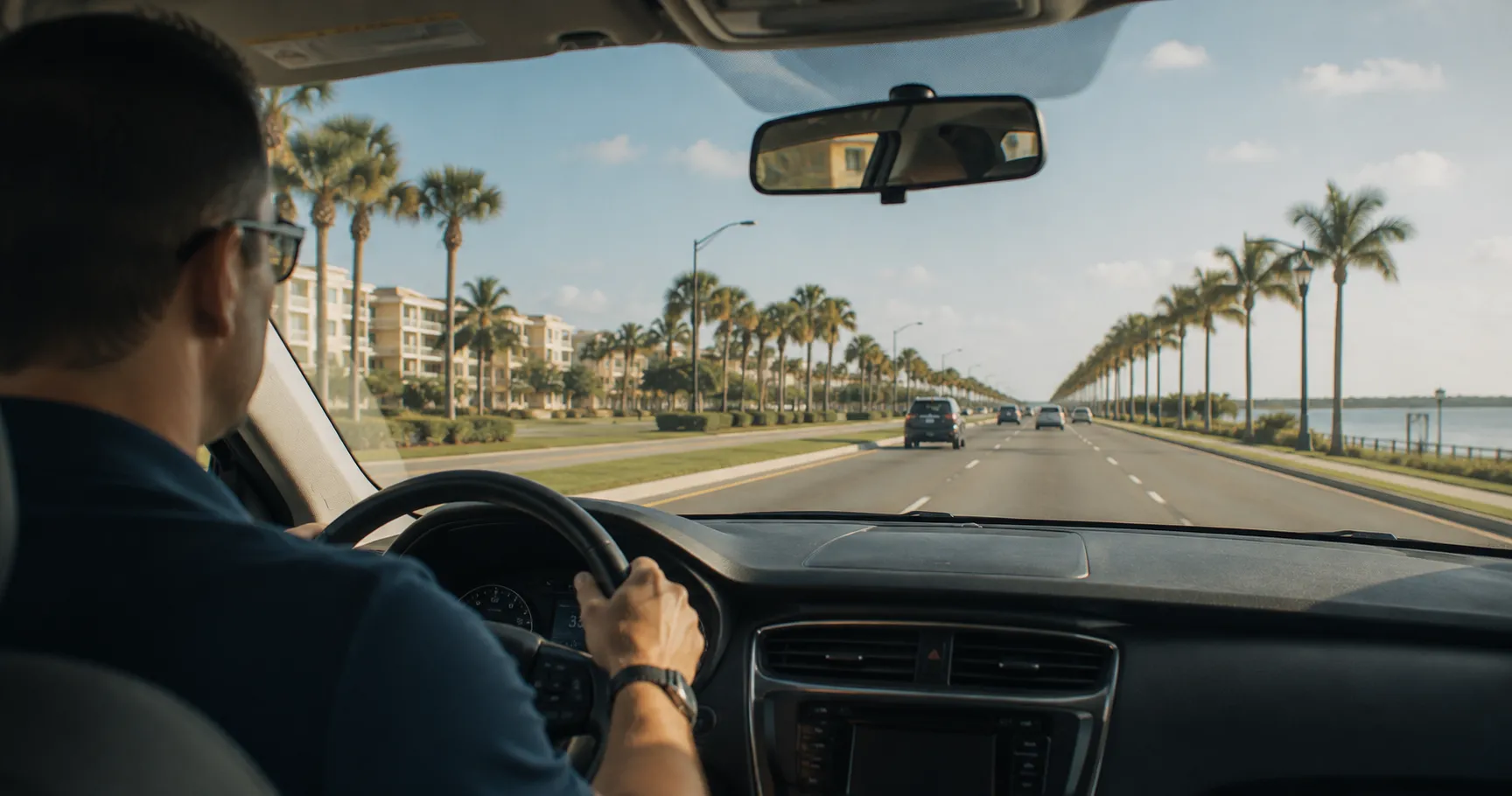
They’re busy in very different ways. U.S. 19 is a high-speed, multi-lane road where the biggest risks come from speed differences, sudden braking, and intersection crashes. Alternate 19 is slower but denser — lined with shops, restaurants, and driveways, with constant turning and merging traffic, plus foot traffic near the Sponge Docks and where the Pinellas Trail crosses the road.
Traffic also swells with the seasons. From roughly October through April, snowbirds and visitors put far more cars on both routes, and tourist parking near the waterfront adds unpredictable stops and turns. None of this means you can’t drive them safely — it just means the margin for a distracted moment is smaller than most people assume.
1. Give yourself room
Following distance is your single biggest cushion against a rear-end collision. On a high-speed road like U.S. 19, leave at least three to four seconds between you and the car ahead — more in rain. That gap gives you time to react when someone brakes suddenly for a turn or a light.
2. Slow down and scan at busy intersections
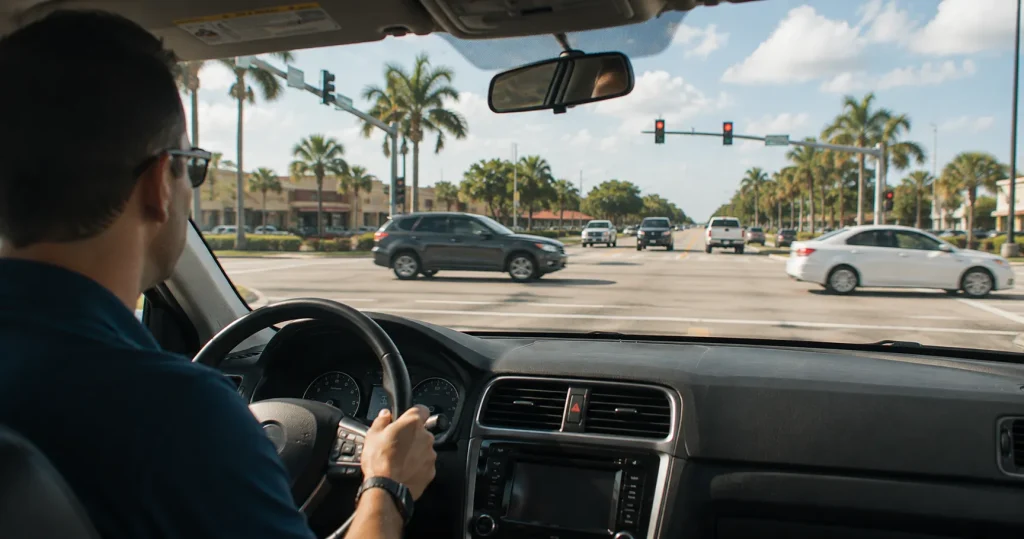
Intersections along U.S. 19 and the busier crossings on Alternate 19 — like Tarpon Avenue and Klosterman Road — are where a lot of serious crashes happen, from red-light runners to left-turn conflicts. When your light turns green, take a beat and glance both ways before you go. A driver trying to beat a yellow is the most common cause of a T-bone collision, and that half-second look can save you.
3. Watch for turning and merging traffic
Alternate 19 is full of driveways, plaza entrances, and short merge points, and the Sponge Docks area adds drivers slowing to look for parking. Cars pull out expecting a gap that isn’t quite there, and vehicles brake hard to make a turn-in. Ease off the gas as you pass busy entrances so you’re ready if someone edges out, and stay out of a driver’s blind spot when you can.
4. Put the phone down
At 45 miles per hour, glancing at a text for four seconds means you’ve traveled the length of a football field essentially blind. Set your navigation before you pull out, keep your phone out of reach, and let calls go to voicemail. No message is worth a crash on a road this busy.
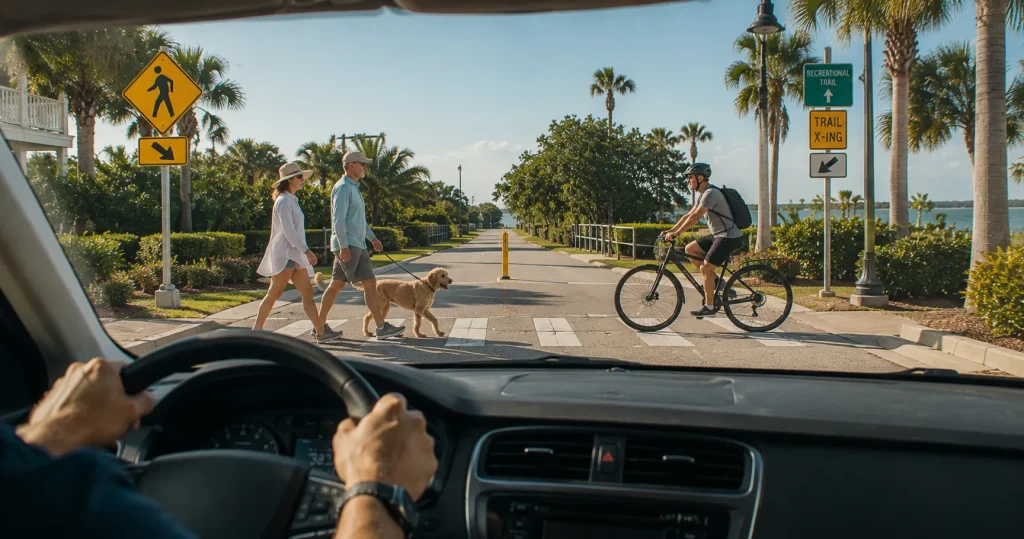
5. Watch for people on foot and on bikes
Tarpon Springs draws walkers and cyclists — tourists around the Sponge Docks and the Pinellas Trail, whose northern end runs right through town and crosses local roads. Slow down and be ready to stop at trail crossings and crosswalks, especially near the waterfront where people step off curbs without looking. And in Florida, turn your headlights on whenever your wipers are running — a sudden coastal downpour makes everyone harder to see.
If you're in a crash on U.S. 19 or Alternate 19
Even careful drivers get hit by someone else’s mistake. If it happens, your health comes first — then protecting your ability to recover what the crash cost you. We walked through the full checklist in our guide on what to do after a car accident in Tarpon Springs, including Florida’s 14-day medical rule and how the state’s no-fault insurance works.
The short version: get checked by a doctor even if you feel fine, document everything at the scene, be careful about what you tell the other driver’s insurer, and know that you generally have a limited window to act on an injury claim.
Frequently asked questions
Is U.S. 19 or Alternate 19 more dangerous to drive?
They carry different risks rather than one simply being worse. U.S. 19 is higher-speed, so crashes there tend to involve speed differences, sudden stops, and intersection collisions. Alternate 19 is slower but denser, with constant turning and merging at driveways and plazas plus more foot traffic near downtown and the Sponge Docks. The safe approach is the same on both: leave room, slow at intersections, and stay alert for vehicles and people entering the road.
Does Florida law require headlights in the rain?
Yes. Florida law requires your headlights to be on any time your windshield wipers are running, as well as from sunset to sunrise. Beyond the rule, headlights make you far easier to see in the sudden storms that roll in off the Gulf — so switch them on and ease off the gas.
Do I have to stop for people crossing at the Pinellas Trail?
Yes. Drivers must yield to pedestrians and cyclists at marked crossings, including where the Pinellas Trail crosses local streets in Tarpon Springs. Slow as you approach a crossing, be prepared to stop, and never pass a vehicle that has stopped ahead of you — it may be yielding to someone you can’t yet see.
How LMD helps injured neighbors in Tarpon Springs
At Lucas, Macyszyn & Dyer, the attorney you meet is the attorney who handles your case — no call centers, no handoffs. We prepare every case as if it’s headed to trial, because that’s what earns respect from insurance companies and stronger results for our clients. And we’re right here in the community: our Tarpon Springs office serves injured people across Pinellas County, backed by 20+ years of experience and more than $100 million recovered for clients. (Past results do not guarantee a similar outcome.)
Talk to a real attorney, free
If you or someone you love was hurt in a crash on U.S. 19, Alternate 19, or anywhere in Pinellas County, we’re ready to help. Get a free case evaluation — no pressure, no obligation, and no fee unless we win your case.
Lucas, Macyszyn & Dyer — Injury Attorneys 623 East Tarpon Avenue, Tarpon Springs, FL 34689 Call (727) 849-5353 for your free case evaluation.
This article is general information about Florida law and safe driving, not legal advice, and reading it doesn’t create an attorney-client relationship. Every case is different — talk to an attorney about your specific situation.



 (727) 849-5353