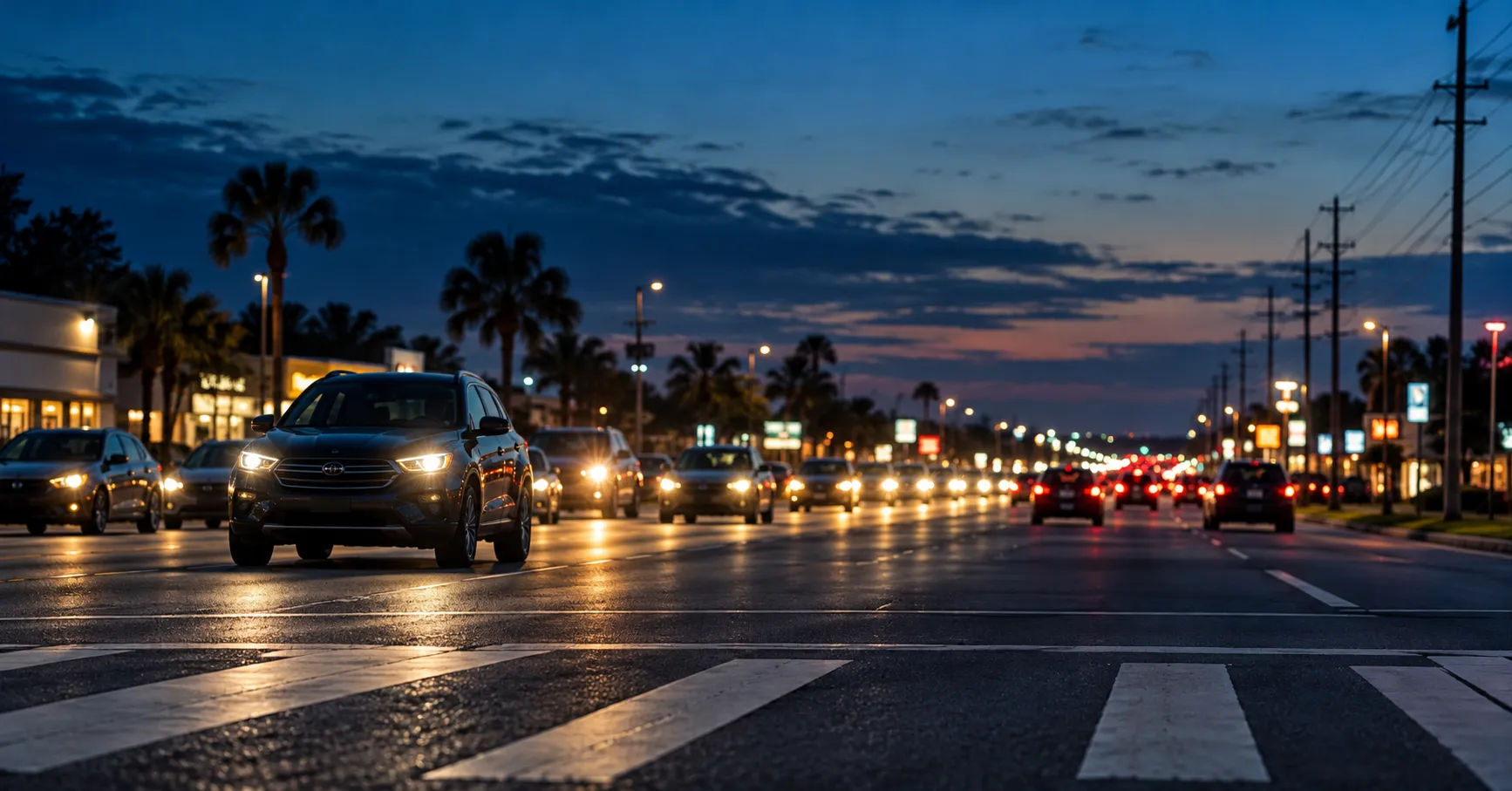
Daylight saving time ends Sunday, Nov. 1, and the sun will set before 6 p.m. for the rest of the year. That puts the evening rush in New Port Richey in the dark. A few small habits can lower your risk on U.S. 19, Little Road, and Main Street, and knowing what to do after a nighttime crash protects your claim if someone else causes one.
Why the first weeks after the time change are risky
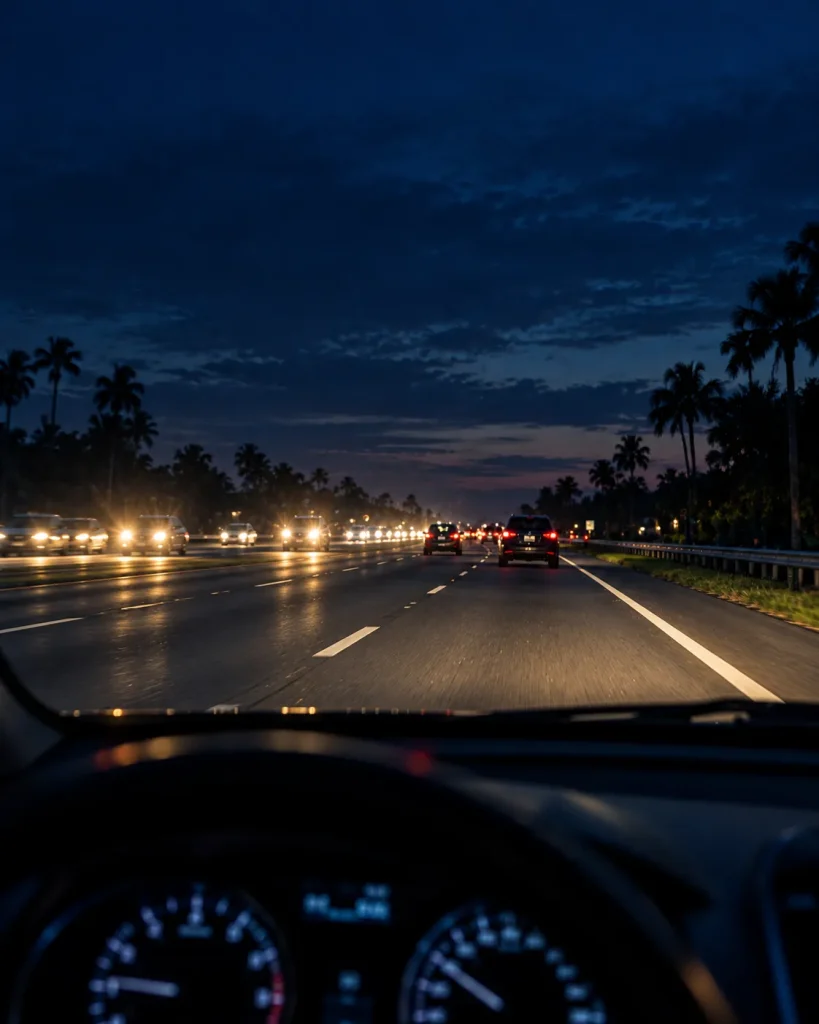
Your drive home looks the same on the map but very different through the windshield. Shadows hide people walking to bus stops. Oncoming headlights and bright storefronts along U.S. 19 create glare. And your body clock needs a few days to adjust, so drowsiness can creep in earlier than you expect.
None of that means a crash is anyone’s fault by default. It means every driver on the road has to adjust, and those who don’t can cause serious harm.
Five habits for safer night driving in New Port Richey
1. Turn your headlights on before you think you need them
Florida law requires lighted headlamps from sunset to sunrise, including twilight (Fla. Stat. § 316.217). Twilight counts, so headlights belong on as soon as the sun drops, not when the road goes fully dark. Automatic headlights help, but check that yours are actually on at dusk.
2. Expect people on foot and on bikes
3. Cut the glare
A dirty windshield scatters light from every oncoming car. Clean the inside and outside of the glass, replace streaky wipers, and dim your dashboard screen. When an oncoming car’s lights are bright, look toward the right edge line of your lane until it passes.
4. Watch for drowsiness during the adjustment week
If you feel heavy-eyed on the drive home, take it seriously. Roll down a window, pull into a lit parking lot, or let someone else drive. A short stop costs minutes. A drowsy crash can cost far more.
5. Leave more space and slow down
You see less at night, so you need more time to react. Add a few extra seconds of following distance and ease off the speed when the road is unlit or wet.
What to do after a nighttime crash
Evidence fades fast after dark. These steps help you hold on to it:
Get to safety and call 911. Turn on hazard lights and move out of traffic if you can do so safely.
Photograph everything with your flash on. Capture vehicle damage, the positions of the cars, and the lighting at the scene.
Note the lighting conditions. Was a streetlight out? Was the other driver’s headlight off? Write it down while it’s fresh.
Look for cameras. Many businesses along U.S. 19 have cameras, and footage is often recorded over within days. Ask an attorney to request it quickly.
Get checked by a doctor promptly. Some injuries don’t show symptoms right away.
Talk to a lawyer before you talk to the other driver’s insurer. Insurers may use what you say against your claim.
Frequently asked questions
Does Florida require headlights at dusk? Yes. Under Fla. Stat. § 316.217, headlights are required from sunset to sunrise, and the law specifically includes twilight. They’re also required during rain, smoke, or fog.
Does a dark road or broken streetlight affect my claim? It can. Poor lighting may help explain how a crash happened, and in some cases another party may share responsibility. An attorney can look at who was responsible for the road and the lighting.
What if I was partly at fault for a night crash? Florida uses modified comparative negligence. Your recovery is reduced by your share of fault, and if you’re found more than 50% at fault, you can’t recover damages (Fla. Stat. § 768.81). Every case is different, so get advice on yours.
Talk to a New Port Richey car accident attorney
If a driver hurt you on a dark road, you don’t have to figure out what comes next on your own. The attorney you meet at LMD is the attorney who handles your case, and we prepare every case as if it’s going to trial. Learn more about our New Port Richey car accident lawyers, or contact us.
Call (727) 849-5353 for a free case evaluation at our office at 9020 Rancho Del Rio Drive, Suite 101, New Port Richey, FL 34655. No fee unless we win.
This article is general information, not legal advice. Reading it does not create an attorney-client relationship.


 (727) 849-5353