


 (727) 849-5353
LMD West Central Florida PI Claim Journey
What to Expect During Your Personal Injury Claim Journey in West Central Florida
If you have never been through a personal injury claim, the process can feel like a black box. You are hurt, bills are arriving, an adjuster is calling, and no one has explained what actually happens next or how long it takes. This guide walks you through the full Florida personal injury claim process, from the day of the accident to the day your case resolves, so you know what is coming at each stage.
Every claim is different, but almost all of them move through the same phases. Understanding those phases helps you make better decisions and avoid the mistakes that quietly reduce settlements.
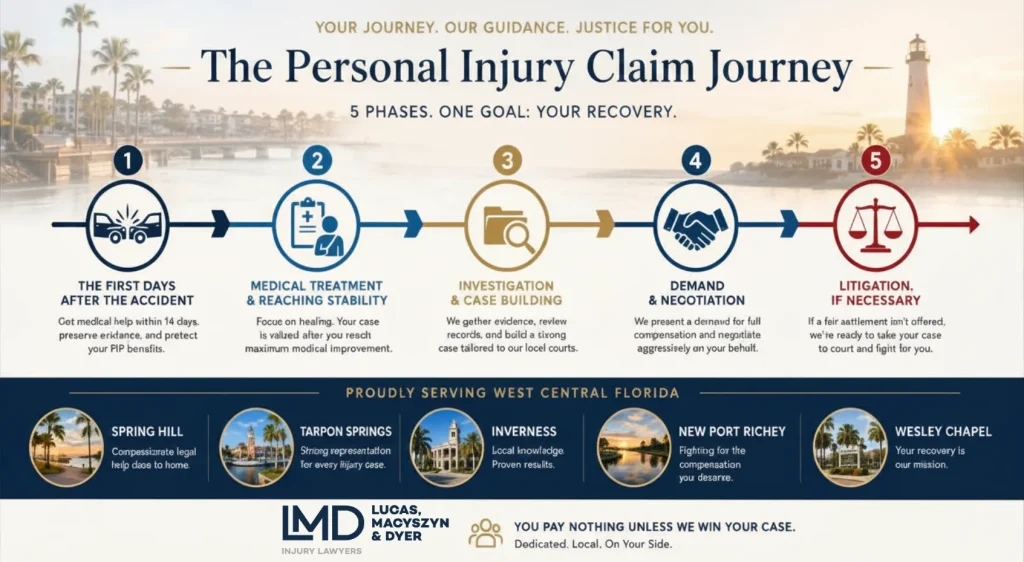
Phase One: The First Days After the Accident
The earliest days shape everything that follows. Under Florida’s no-fault system, you have 14 days from the accident to seek medical treatment, or your Personal Injury Protection benefits can be denied entirely. Those PIP benefits Florida law provides cover up to $10,000 in medical bills and lost wages regardless of who caused the crash, so getting evaluated quickly is both a health decision and a legal one.
This is also the window when evidence is freshest. Vehicle positions, skid marks, surveillance footage, and witness memories all fade fast. A claim that starts with prompt treatment and preserved evidence is far stronger than one built weeks later from fragments.

Phase Two: Medical Treatment and Reaching Stability
The next phase is the longest, and it is the one clients find hardest to sit through. Your attorney will usually wait to value your claim until you reach what doctors call maximum medical improvement, the point where your condition has stabilized and the long-term picture is clear.
Settling before you reach that point is risky. If you accept a personal injury settlement in Florida in month two and discover in month six that you need surgery, that settlement is final and the additional cost falls on you. Patience during treatment protects the value of the entire claim.
Phase Three: Investigation and Case Building
While you heal, your legal team works. This phase involves gathering the police report, medical records, wage documentation, and liability evidence, and often consulting experts. Where your case would eventually be filed matters here too, whether that is the Pinellas County Justice Center, the West Pasco Judicial Center in New Port Richey, or the courthouses serving Hernando and Citrus counties. Local court tendencies influence how insurers value a claim before a lawsuit is ever filed.
Phase Four: The Demand and Negotiation
Once your treatment stabilizes, your attorney assembles a demand package: liability proof, medical documentation, lost income, and the human impact of the injury. The insurer responds, and negotiation begins. Florida’s comparative negligence rule looms over this stage. Your compensation is reduced by your share of fault, and being found more than 50 percent at fault eliminates recovery entirely. Insurers push your fault percentage upward, which is why the evidence built in earlier phases carries so much weight now.
Phase Five: Litigation, If It Comes to That
Most claims settle in negotiation. When an insurer refuses fair value, filing a lawsuit becomes necessary. Florida generally allows two years from the date of injury to file, a deadline that arrives sooner than most people expect. Litigation adds discovery, depositions, and sometimes mediation, and it often changes the insurer’s math once they see a prepared case headed for trial.
Why the Journey Looks Different Across Our Region
A claim in Wesley Chapel does not look identical to one in Tarpon Springs or Inverness. Traffic patterns, jury pools, court procedures, and the types of accidents common in each community all shape the path. As your West Central Florida accident attorney, LMD Injury Lawyers serves accident victims across Spring Hill, Tarpon Springs, Inverness, New Port Richey, and Wesley Chapel, tailoring each claim to the county and community it belongs to.
Have Questions About Your Own Timeline? Let Us Walk You Through It
You should not have to guess at what happens next. If you or a loved one was injured anywhere in West Central Florida, contact a personal injury lawyer in Spring Hill, FL at LMD Injury Lawyers for a free consultation. We will map out your specific claim journey, and you pay nothing unless we win your case.
Frequently Asked Questions
How long does a personal injury claim take in Florida?
The timeline varies depending on the severity of your injuries and whether the case settles or goes to litigation. Minor claims can resolve in a few months, while cases involving serious injuries often take a year or more — primarily because your attorney will wait until you reach maximum medical improvement before valuing the claim. Rushing a settlement before that point can leave significant compensation on the table.
What is the deadline to file a personal injury lawsuit in Florida?
Florida generally allows two years from the date of the injury to file a personal injury lawsuit. While that may feel like plenty of time, evidence fades and witnesses become harder to locate as time passes. It is important to consult an attorney as soon as possible after an accident to protect your rights and preserve key evidence.
What does Florida's no-fault insurance system mean for my claim?
Under Florida’s no-fault system, your own Personal Injury Protection (PIP) insurance covers up to $10,000 in medical bills and lost wages after an accident, regardless of who was at fault. You must seek medical treatment within 14 days of the accident or those benefits can be denied. For injuries that exceed the PIP threshold, you may be able to pursue additional compensation from the at-fault driver.
How does Florida's comparative negligence rule affect my settlement?
Florida follows a modified comparative negligence rule, meaning your compensation is reduced by the percentage of fault assigned to you. If you are found more than 50 percent at fault for the accident, you cannot recover any compensation at all. Insurers often try to increase your share of fault to reduce their payout, which is why thorough evidence gathering from the very start of your claim is so critical.
Do I need a personal injury lawyer for my claim in West Central Florida?
While you are not legally required to hire an attorney, having an experienced personal injury lawyer significantly improves your chances of a fair outcome. An attorney handles investigation, negotiation with insurers, and litigation if needed. At LMD Injury Lawyers, you pay nothing unless we win your case — contact us for a free consultation to understand what your claim may be worth.
Frequently Asked Questions
How long does a personal injury claim take in Florida?
The timeline varies depending on injury severity and whether the case settles or goes to litigation. Minor claims can resolve in a few months; cases involving serious injuries often take a year or more, primarily because your attorney will wait until you reach maximum medical improvement before valuing the claim.
What is the deadline to file a personal injury lawsuit in Florida?
Florida generally allows two years from the date of injury to file a personal injury lawsuit. Evidence fades and witnesses become harder to locate over time, so consulting an attorney as soon as possible after an accident is the best way to protect your rights.
What does Florida's no-fault system mean for my claim?
Your own Personal Injury Protection (PIP) insurance covers up to $10,000 in medical bills and lost wages regardless of fault, but you must seek treatment within 14 days or those benefits can be denied. For injuries exceeding the PIP threshold, you may pursue additional compensation from the at-fault driver.
How does comparative negligence affect my recovery?
Florida’s modified comparative negligence rule reduces your compensation by your share of fault. If you are found more than 50 percent at fault, you cannot recover any compensation. Insurers routinely try to push your fault percentage up, which is why strong evidence gathered early is so important.
Do I need a personal injury lawyer for my West Central Florida claim?
An experienced attorney handles investigation, insurer negotiation, and litigation if needed — and at LMD Injury Lawyers you pay nothing unless we win. A free consultation can help you understand what your claim may be worth.