Boating safety on Hernando County's waterways
Out here, boating is a way of life. Whether you’re drifting down the Weeki Wachee, running out of Hernando Beach, or heading into the Gulf from Bayport, the water is one of the best parts of living in Hernando County. Most days on the water are close to perfect.
But summer is also the busiest season out there — more boats, more paddlers, more first-time operators, and more heat and sun in the mix. A little preparation keeps a great day from turning into a bad one. Here’s a practical guide to boating safely on our local waterways, plus what to do if an accident happens.
Why summer is the busiest season on the water
More traffic simply means more chances for something to go wrong. Rivers like the Weeki Wachee fill with kayaks, paddleboards, and tubers sharing narrow water with powered boats. New operators may not know the local no-wake zones or right-of-way rules. And the combination of sun, heat, and a few drinks slows reaction time faster than people expect. None of this should keep you off the water — it just means the basics matter more in July and August than any other time of year.
1. Get certified and know the rules
In Florida, anyone born on or after January 1, 1988 must complete an approved boater safety course and carry a Boating Safety Education ID Card to operate a vessel of 10 horsepower or more. Even if you’re not required to, the course is worth it — it covers right-of-way, navigation markers, and the local rules that prevent most collisions.
2. Life jackets on — especially for kids
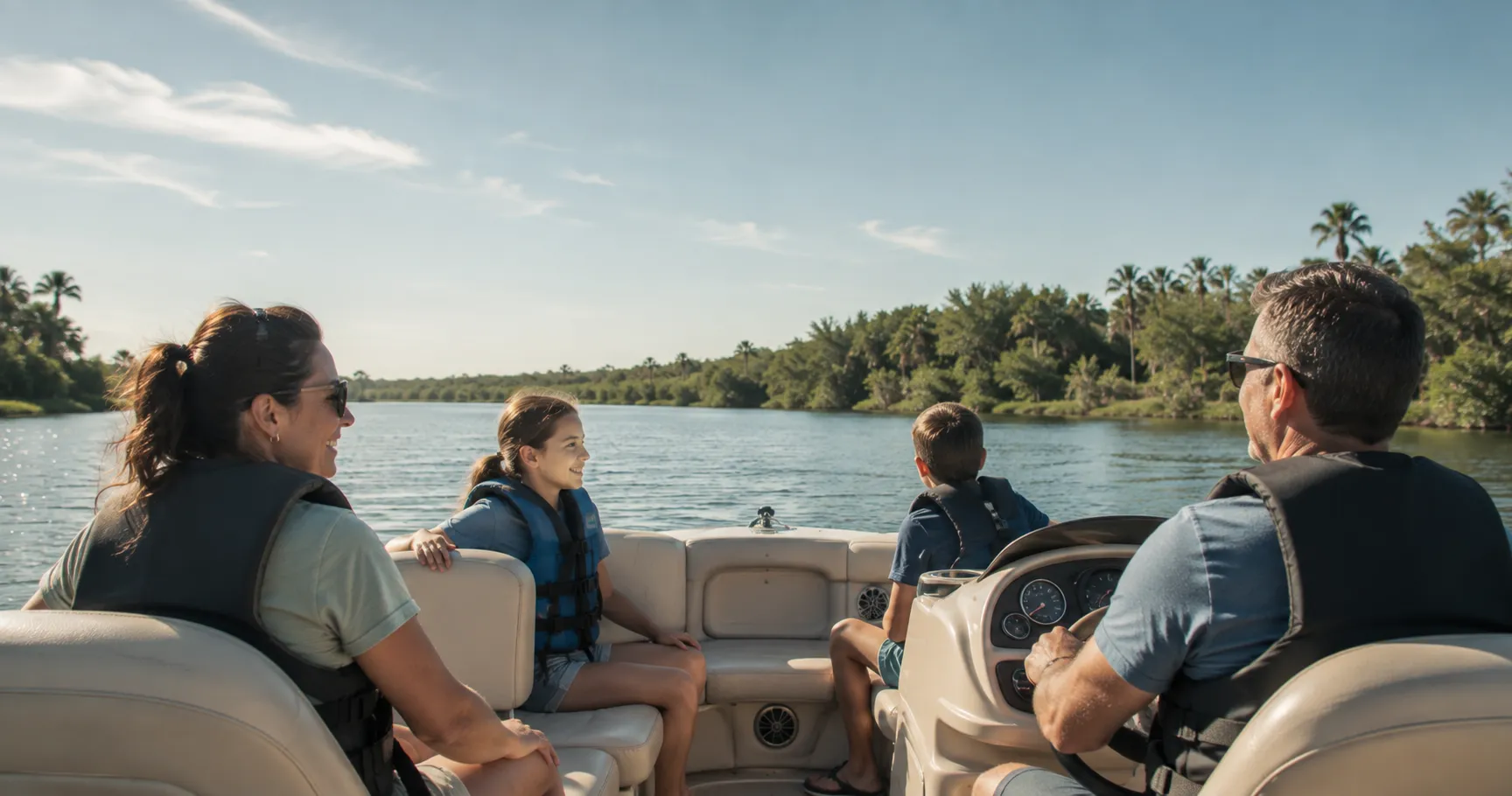
Keep one U.S. Coast Guard-approved life jacket aboard for every person, and make sure they’re easy to reach — not buried in a hatch. Florida law requires children under 6 to wear a life jacket while on a vessel under 26 feet that’s underway, but the safest habit is simple: kids and weak swimmers wear theirs the whole time.
3. Clip in the engine cut-off switch
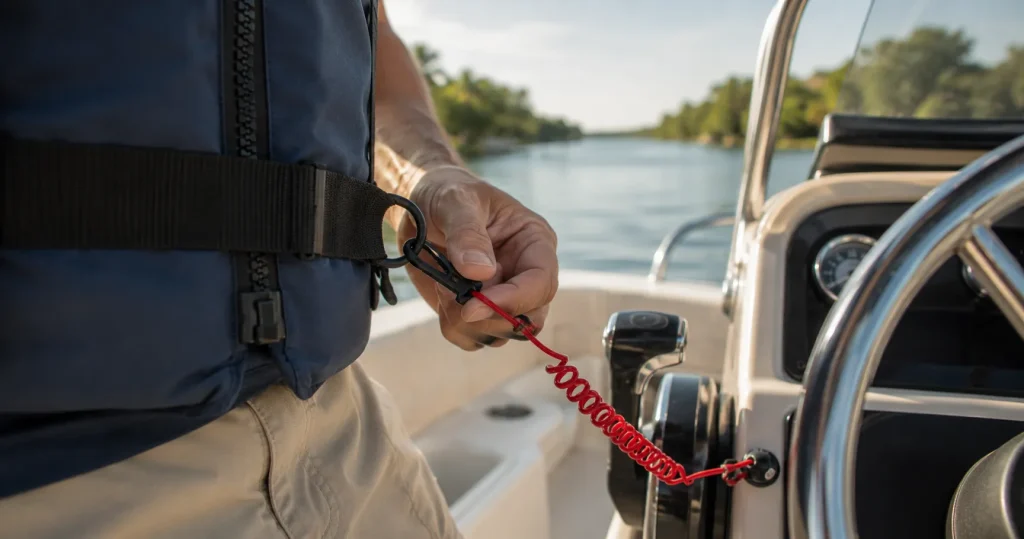
If you’re operating a smaller powerboat, use the engine cut-off switch — the lanyard or wireless fob that kills the motor if you’re thrown from the helm. Federal law now requires it on many recreational vessels under 26 feet when running on plane, and it prevents the nightmare scenario of a driverless boat circling back toward people in the water.
4. Keep a sober skipper
Boating under the influence carries the same 0.08 legal limit as driving, and the penalties are serious. It’s also more dangerous than it sounds: sun, heat, wind, and the motion of the water intensify the effects of alcohol. Pick a sober operator before you leave the dock, and keep plenty of water and shade aboard.
5. Respect the rivers, the wildlife, and the weather
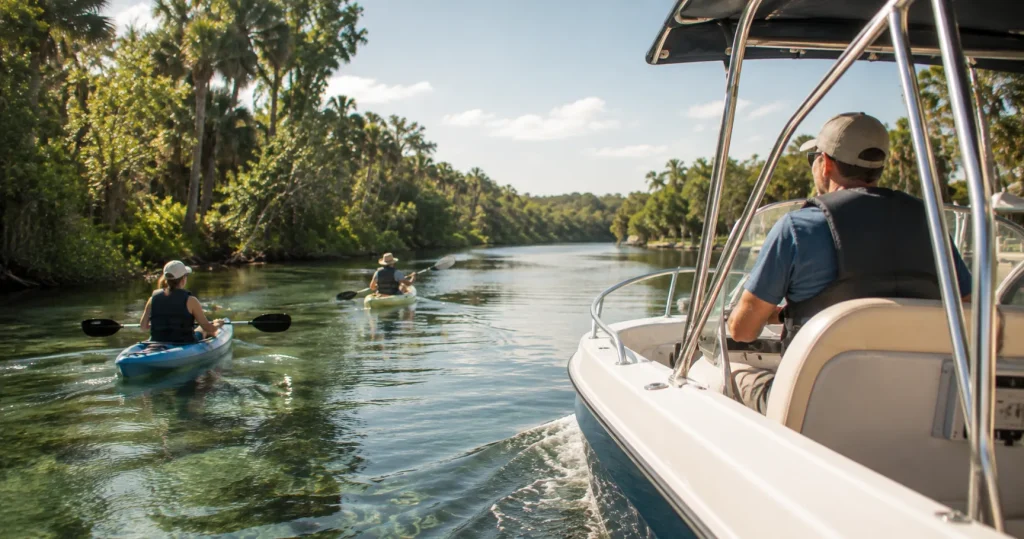
Slow to idle speed in posted no-wake zones and anywhere paddlers, swimmers, or manatees are present — the Weeki Wachee gets especially crowded in summer. And keep one eye on the sky: Florida’s afternoon storms build fast this time of year, so check the forecast before you launch, tell someone your float plan, and head in early if you see weather rolling toward the coast.
If you're in a boating accident
Even careful boaters can get hurt by someone else’s mistake. If it happens, get everyone to safety and call for help first. Florida requires boating accidents to be reported to the Florida Fish and Wildlife Conservation Commission (FWC) or local law enforcement when there’s an injury beyond immediate first aid, a death or disappearance, or significant property damage. Get medical care right away, document what happened and who was involved if you’re able, and be careful about giving statements before you understand your rights. You can learn more on our Spring Hill boat accident page.
Frequently asked questions
Do I need a license to operate a boat in Florida?
Florida doesn’t issue a separate “boating license,” but anyone born on or after January 1, 1988 must complete an approved boater safety course and carry a Boating Safety Education ID Card to operate a vessel of 10 horsepower or more. The card doesn’t expire.
Do children have to wear life jackets on the boat?
Yes. Florida law requires children under 6 years old to wear a U.S. Coast Guard-approved life jacket while on a vessel less than 26 feet that is underway. Every vessel also has to carry one wearable, approved life jacket for each person aboard, regardless of age.
Does Florida's no-fault insurance (PIP) cover a boating accident?
No. Florida’s no-fault PIP coverage applies to motor vehicles, not boats, so a boating accident is handled differently than a car crash. Instead of turning to PIP first, an injured person generally pursues a claim against the at-fault operator or owner. Because the rules are different, it’s worth talking to an attorney about how your specific situation works.
What should I do first after a boating accident?
Get everyone to safety and call for help, then make sure the accident is reported to FWC or law enforcement as Florida requires. See a doctor promptly even if injuries seem minor, and if you’re able, photograph the scene and collect names and contact information for the other operator and any witnesses. The sooner the details are recorded, the easier it is to sort out what happened.
How LMD helps injured neighbors in Spring Hill
At Lucas, Macyszyn & Dyer, the attorney you meet is the attorney who handles your case — no call centers, no handoffs. We prepare every case as if it’s headed to trial, because that’s what earns respect from insurance companies and stronger results for our clients. And we’re right here in the community: our Spring Hill office serves injured people across Hernando County, backed by 20+ years of experience and more than $100 million recovered for clients. (Past results do not guarantee a similar outcome.)
Talk to a real attorney, free
If you or someone you love was hurt in a boating accident on the Weeki Wachee, out of Hernando Beach, or anywhere on our local waters, we’re ready to help. Get a free case evaluation — no pressure, no obligation, and no fee unless we win your case.
Lucas, Macyszyn & Dyer — Injury Attorneys 2190 Commercial Way, Spring Hill, FL 34606 Call (352) 686-0080 for your free case evaluation.
This article is general information about Florida law and boating safety, not legal advice, and reading it doesn’t create an attorney-client relationship. Every case is different — talk to an attorney about your specific situation.



 (727) 849-5353