


 (727) 849-5353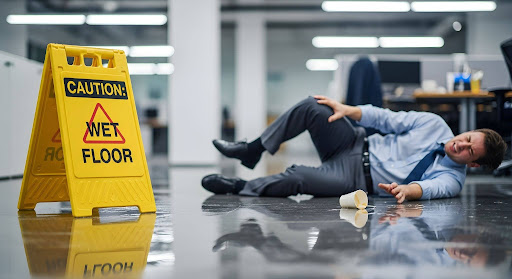
Slip and Fall Accidents in Florida: Know Your Legal Rights
Every year, thousands of Floridians are seriously injured in slip and fall accidents, on wet grocery store floors, uneven parking lots, poorly lit stairwells, and crumbling sidewalks outside commercial properties. Many of them assume it was just bad luck and never explore whether the property owner bears legal responsibility.
In many cases, they do. Florida premises liability law imposes a legal duty on property owners and occupiers to maintain reasonably safe conditions for visitors. When they fail to meet that duty and someone is injured as a result, the injured person has the right to pursue compensation.
Understanding who is responsible after a slip and fall in Inverness, and how to build a successful fall injury claim, requires knowing exactly how Florida’s premises liability law works and how property owner negligence is established. This guide covers both.
What Is Premises Liability Under Florida Law?
Premises liability is the area of Florida law that governs a property owner’s legal responsibility for injuries that occur on their property. It applies to a wide range of accidents, including:
- Slip and fall accidents on wet, slippery, or cluttered floors
- Trip and fall accidents caused by uneven pavement, broken steps, or raised carpet edges
- Falls from heights due to defective railings or guardrails
- Injuries caused by poor lighting in parking lots, stairwells, or common areas
- Swimming pool accidents and inadequate fencing
- Dog bites and animal attacks on private property
- Injuries in poorly maintained rental properties
The central question in any premises liability case in Florida is whether the property owner knew, or reasonably should have known, about the dangerous condition and failed to address it or warn visitors.
Florida’s Premises Liability Standard: What Must Be Proven
To succeed in a slip and fall claim in Inverness, your attorney must establish the following elements:
1. A Hazardous Condition Existed
The first element is proving that a dangerous condition was present, a wet floor without signage, a pothole in the parking lot, a broken step, inadequate lighting. The condition does not have to be dramatic. Even minor hazards that would be easy for a property owner to address can form the basis of a valid claim if they caused a serious injury.
2. The Property Owner Knew or Should Have Known About It
This is often the most contested element of a premises liability Florida case. There are two ways to establish knowledge:
- Actual knowledge, The owner or an employee was directly aware of the hazard (for example, a leak was reported to management hours before your fall)
- Constructive knowledge, The condition existed long enough that a reasonable property owner exercising proper care should have discovered and corrected it
Florida law specifically requires that plaintiffs in slip and fall cases involving transitory foreign substances (like a spilled liquid) prove that the property owner had actual or constructive knowledge of the hazard. This is why evidence about how long the condition existed, security camera footage, prior complaints, maintenance logs, is so critical.
3. The Property Owner Failed to Act
Even if a property owner knew about a hazard, they can avoid liability if they took reasonable steps to address it, mopping the spill promptly, placing warning cones, or closing off the area. The failure to take those steps constitutes negligence.
4. The Hazardous Condition Caused Your Injury
Your attorney must connect the dangerous condition directly to your fall and your injuries. Medical documentation, photographs of the scene, and witness testimony all contribute to establishing this causal link.
Common Locations for Slip and Fall Accidents in Citrus County
Premises liability claims in and around Inverness frequently arise from:
- Retail stores and grocery stores, Spills in aisles, recently mopped floors without wet floor signs, uneven transitions between flooring surfaces
- Restaurants, Grease, spilled food or drinks, slippery entryways during rain
- Hotels and resorts, Pool areas, wet lobby floors, poorly maintained exterior walkways
- Parking lots, Potholes, cracked pavement, inadequate lighting
- Private residences, Landlord-owned rental properties with maintenance deficiencies
- Government-owned properties, Sidewalks, public buildings, parks (note: claims against government entities involve specific procedural requirements and shorter notice deadlines)
What to Do After a Slip and Fall in Inverness
The actions taken immediately after a fall significantly affect the strength of a slip accident compensation claim in Florida:
- Report the incident. Notify the property owner, manager, or employee on duty immediately and ensure a written incident report is created. Request a copy.
- Do not minimize your injuries at the scene. Avoid statements like “I’m fine” they can be used to undermine your claim later.
- Photograph everything. The hazard that caused your fall, the surrounding area, any warning (or lack thereof), and your injuries.
- Identify witnesses. Get contact information from anyone who saw the fall or was aware of the hazard before it happened.
- Seek medical treatment the same day. As with all injury claims, contemporaneous medical documentation is essential.
- Preserve your clothing and footwear. The shoes you were wearing at the time of the fall may be relevant evidence, do not discard them.
- Contact a slip and fall lawyer in Inverness, FL before speaking to the property owner’s insurance company.
Shared Fault and Florida’s Comparative Negligence Rule
Florida follows a modified comparative negligence standard. If you are found to be partially at fault for your fall, for example, if you were distracted by your phone or were wearing inappropriate footwear, your compensation is reduced by your percentage of fault. If you are found to be more than 50% at fault, you cannot recover damages.
Property owners and their insurers routinely argue that the injured party shares responsibility. This is one of the most common tactics used to minimize premises liability payouts. Having an attorney who anticipates this defense and builds evidence to counter it is essential.
You Deserve Accountability and Compensation
A slip and fall is not just embarrassing, it can result in broken hips, knee injuries, spinal damage, and traumatic brain injuries that change your life. Property owners who fail to maintain safe conditions for visitors should be held responsible for the consequences.
Contact LMD Law Firm today for a free consultation with a slip and fall lawyer in Inverness, FL. We investigate premises liability cases throughout Citrus County and pursue the full compensation you are entitled to, with no upfront fees.