Back-to-school driving safety in Inverness
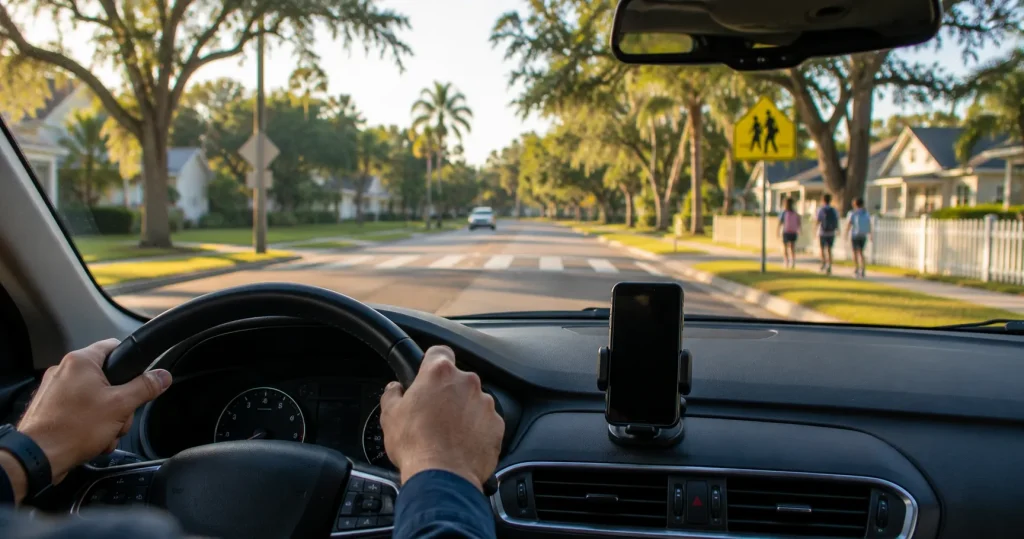
School is back in session across Citrus County, and that changes our roads overnight. Buses are running their routes, kids are waiting at corners in the early morning, crossing guards are back at the intersections, and a wave of teen drivers is heading to the high schools. On our two-lane roads especially, where sidewalks are scarce and buses stop right in the travel lane, the first few weeks call for a little extra care behind the wheel.
Here are the habits that keep our kids safe on the way to school, and yours safe too.
Why the first weeks of school matter most
New routines take time. Mornings are busier, drivers are rushing to beat the first bell, and children don’t always look before they dart across a street. Add unfamiliar bus stops on rural roads without sidewalks, and the drive around Inverness gets busy and unpredictable. None of it is hard to handle — it just asks for a little more patience and attention than a normal drive.
1. Slow down in school zones
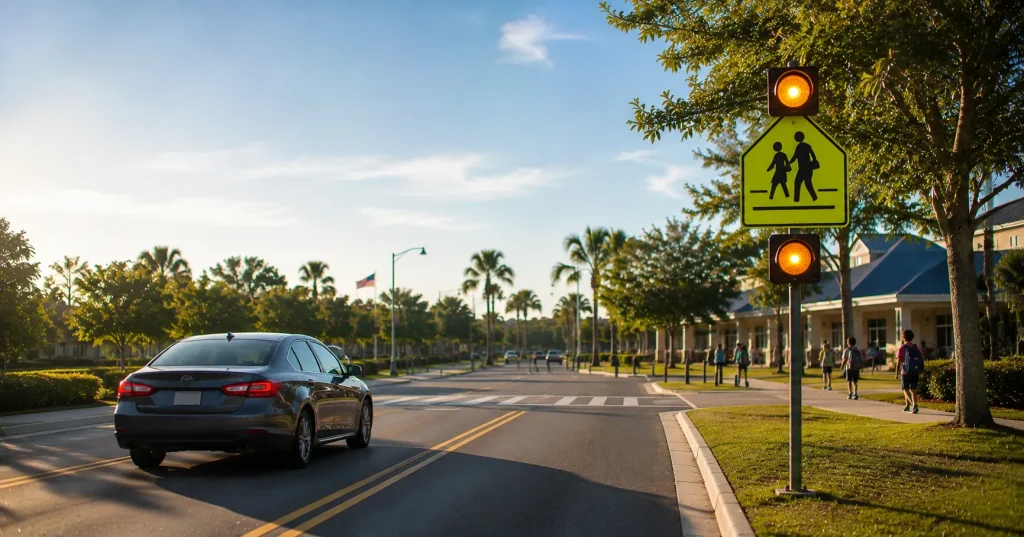
School-zone speed limits drop during posted hours — usually when the yellow beacons are flashing — and they exist because a child can step off a curb in an instant. Ease off early, stay well under the limit, and expect to stop. Worth knowing: speeding fines are doubled in a Florida school zone, so it’s costly as well as dangerous.
2. Know when to stop for a school bus
This is the rule drivers get wrong most often, and it matters even more on our rural roads. On a two-way street or any road without a raised median, everyone must stop when a bus displays its flashing red lights and stop arm — both directions of traffic. The only exception is a divided highway with a raised barrier or a median at least five feet wide; there, oncoming traffic on the far side may proceed with caution, but traffic behind and beside the bus still stops. Many Florida buses now carry cameras that ticket drivers who illegally pass, so when in doubt, stop.
3. Watch for kids at crosswalks and bus stops
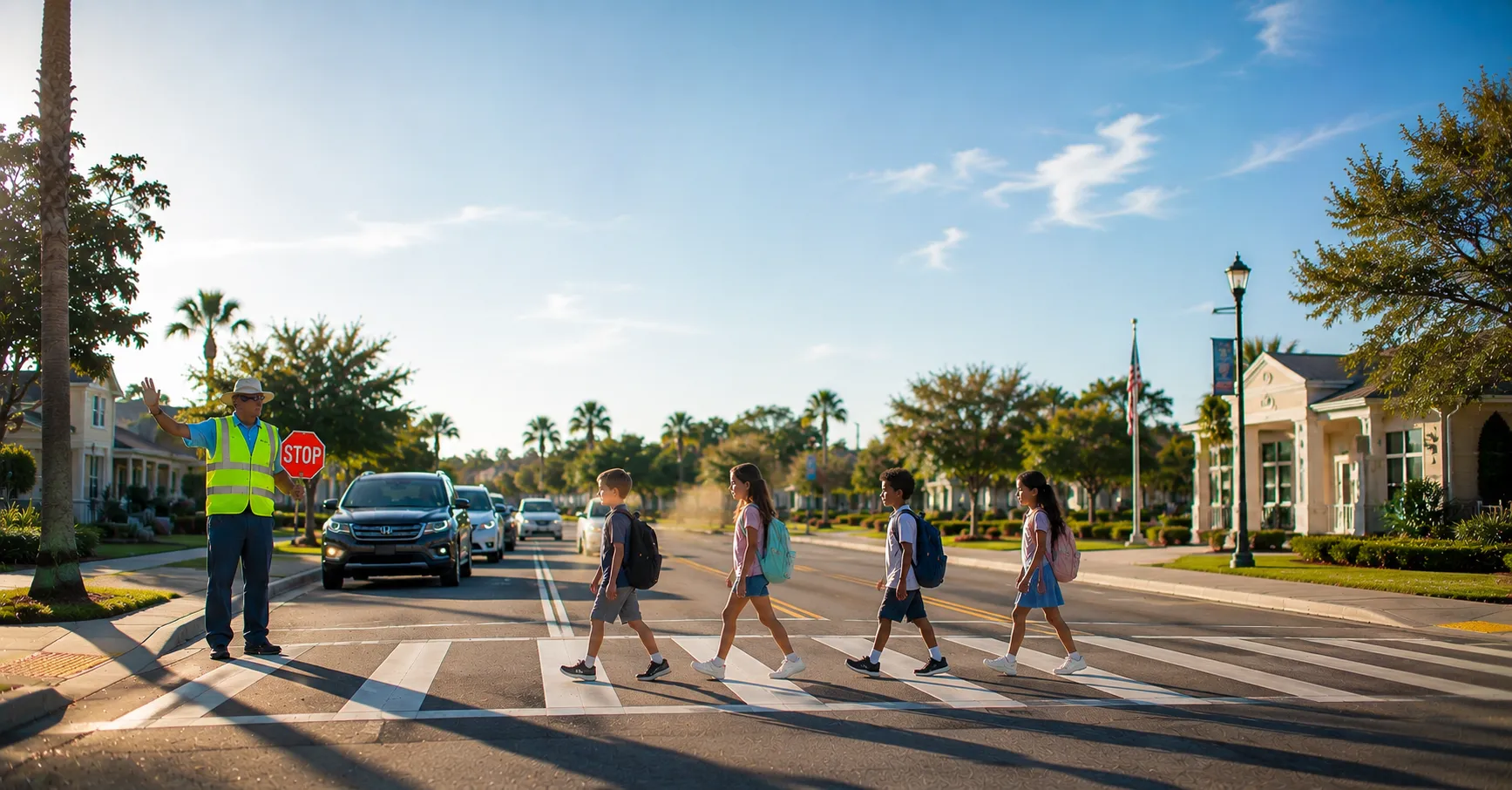
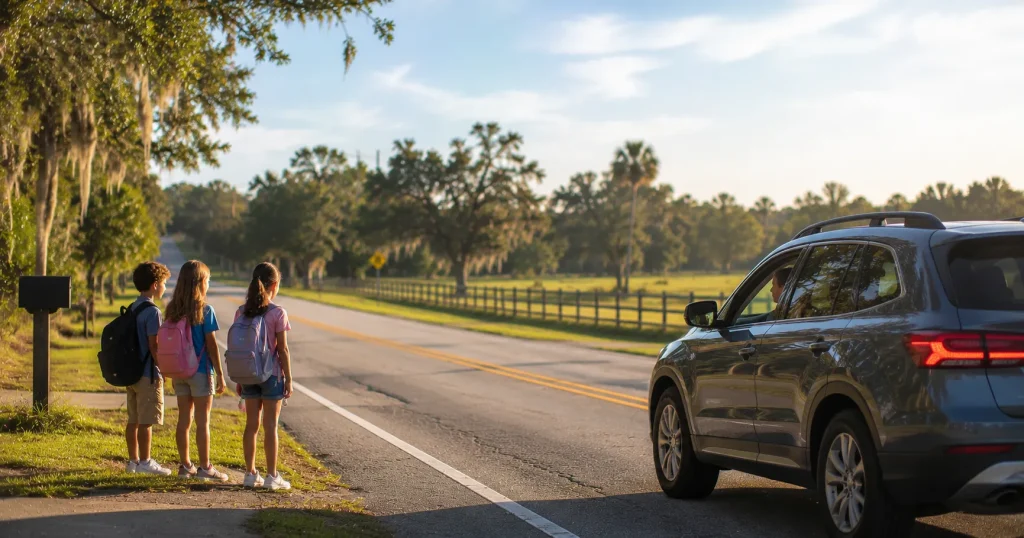
Kids are unpredictable — they chase a dropped item into the street or cross without looking. On rural roads without sidewalks, they often wait right at the edge of the pavement, so give bus stops a wide, slow berth. Always yield to pedestrians in crosswalks, follow the crossing guard’s signals even if the light says otherwise, and scan the roadside near schools and stops.
4. Put the phone down — it's the law here
Florida bans texting while driving statewide, and in a marked school zone it’s illegal to even hold your phone — you have to go hands-free. Set your route before you leave, and keep the phone out of your hands entirely near schools. A glance down is exactly the moment a child steps off the curb.
5. Leave early and give everyone room
Most school-morning close calls come down to one thing: someone was in a hurry. Leave five or ten minutes earlier than you think you need to, give buses and teen drivers extra space, and resist the urge to squeeze through a light. A calm, early start is the simplest safety upgrade there is.
If your child is hurt near school
Even when you do everything right, a careless driver can put a child in harm’s way. If that happens, your child’s health comes first — get medical care right away, even for injuries that look minor, since kids don’t always show symptoms immediately. When you’re able, write down what happened, get the names and contact information of any drivers and witnesses, and make sure a police report is filed. These situations are stressful and emotional, and you don’t have to navigate them alone — our team handles child injury cases for families across Citrus County.
Frequently asked questions
When do I have to stop for a school bus in Florida?
On a two-way street or any road without a raised median, all traffic in both directions must stop when a school bus has its stop arm out and red lights flashing. The one exception is a divided highway separated by a raised barrier or an unpaved median at least five feet wide — there, traffic on the opposite side may continue with caution, but everyone behind and beside the bus still has to stop. When you’re not sure, stop.
How slow do I have to drive in a school zone?
Obey the posted reduced limit during the posted hours, which are usually the times the yellow beacons are flashing. Because a child can step into the road without warning, it’s wise to drive even slower than the sign requires. Keep in mind that speeding fines are doubled in Florida school zones.
Can I use my phone while driving through a school zone?
No. Florida bans texting while driving everywhere, and in a designated school zone the law goes further — you can’t hold a phone at all and must use it hands-free. The safest choice is to set everything before you drive and leave the phone alone near schools entirely.
What should I do if my child is hit by a car near school?
Get medical attention immediately, even if the injuries seem minor, because children often don’t show the full extent of an injury right away. Make sure a police report is filed, and if you’re able, gather the driver’s information and the names of any witnesses. Keep records of medical visits and expenses. When things settle, talking with an attorney can help you understand your options for your child’s situation.
How LMD helps injured neighbors in Inverness
At Lucas, Macyszyn & Dyer, the attorney you meet is the attorney who handles your case — no call centers, no handoffs. We prepare every case as if it’s headed to trial, because that’s what earns respect from insurance companies and stronger results for our clients. And we’re right here in the community: our Inverness office serves injured people across Citrus County, backed by 20+ years of experience and more than $100 million recovered for clients. (Past results do not guarantee a similar outcome.)
Talk to a real attorney, free
If your child or someone you love was hurt by a careless driver in Inverness or anywhere in Citrus County, we’re ready to help. Get a free case evaluation — no pressure, no obligation, and no fee unless we win your case.
Lucas, Macyszyn & Dyer — Injury Attorneys 2200 Highway 44 West, Inverness, FL 34453 Call (352) 469-0080 for your free case evaluation.
This article is general information about Florida law and safe driving, not legal advice, and reading it doesn’t create an attorney-client relationship. Every case is different — talk to an attorney about your specific situation.



 (727) 849-5353